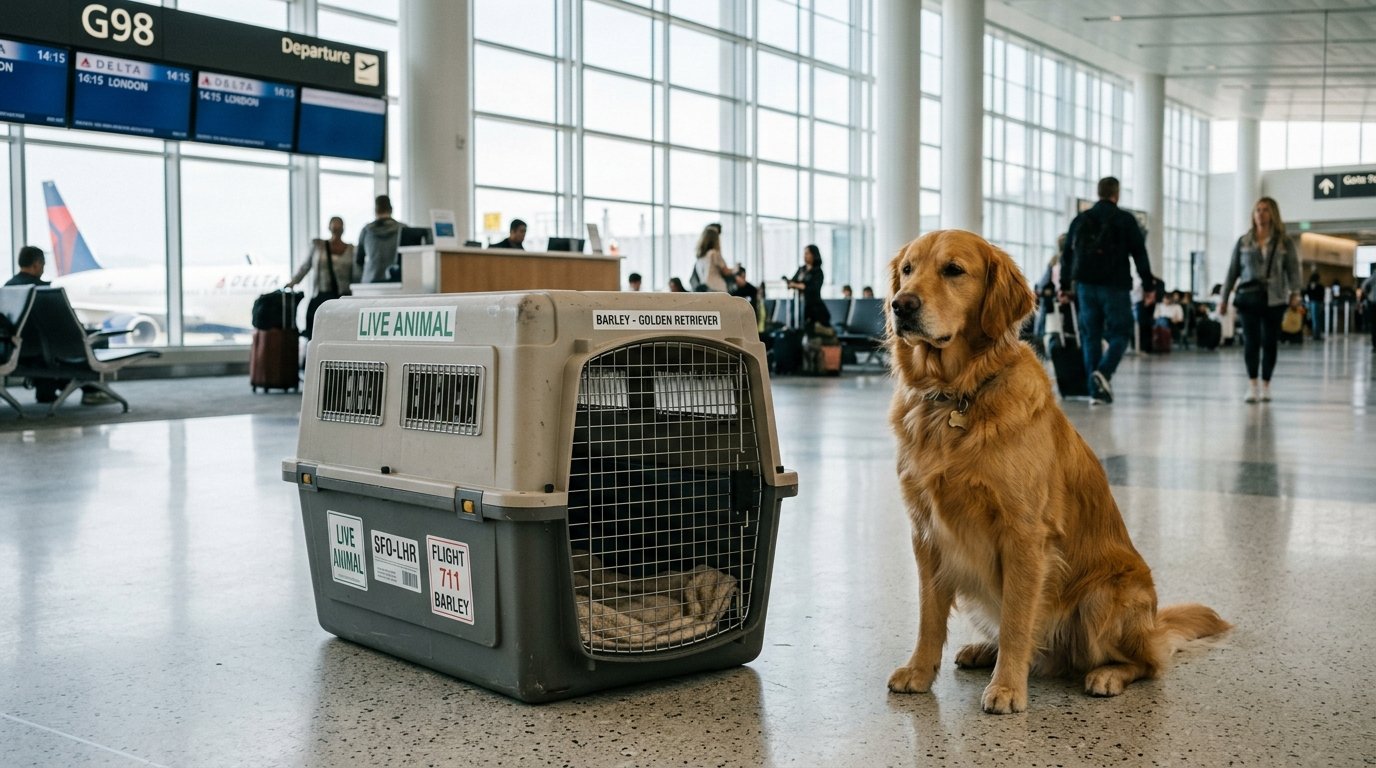
Relocating a pet internationally from or to India requires strict adherence to airline policies (IATA) and complex government health regulations. A single missing document or incorrect crate size can result in a denied boarding at the airport or mandatory quarantine upon arrival.
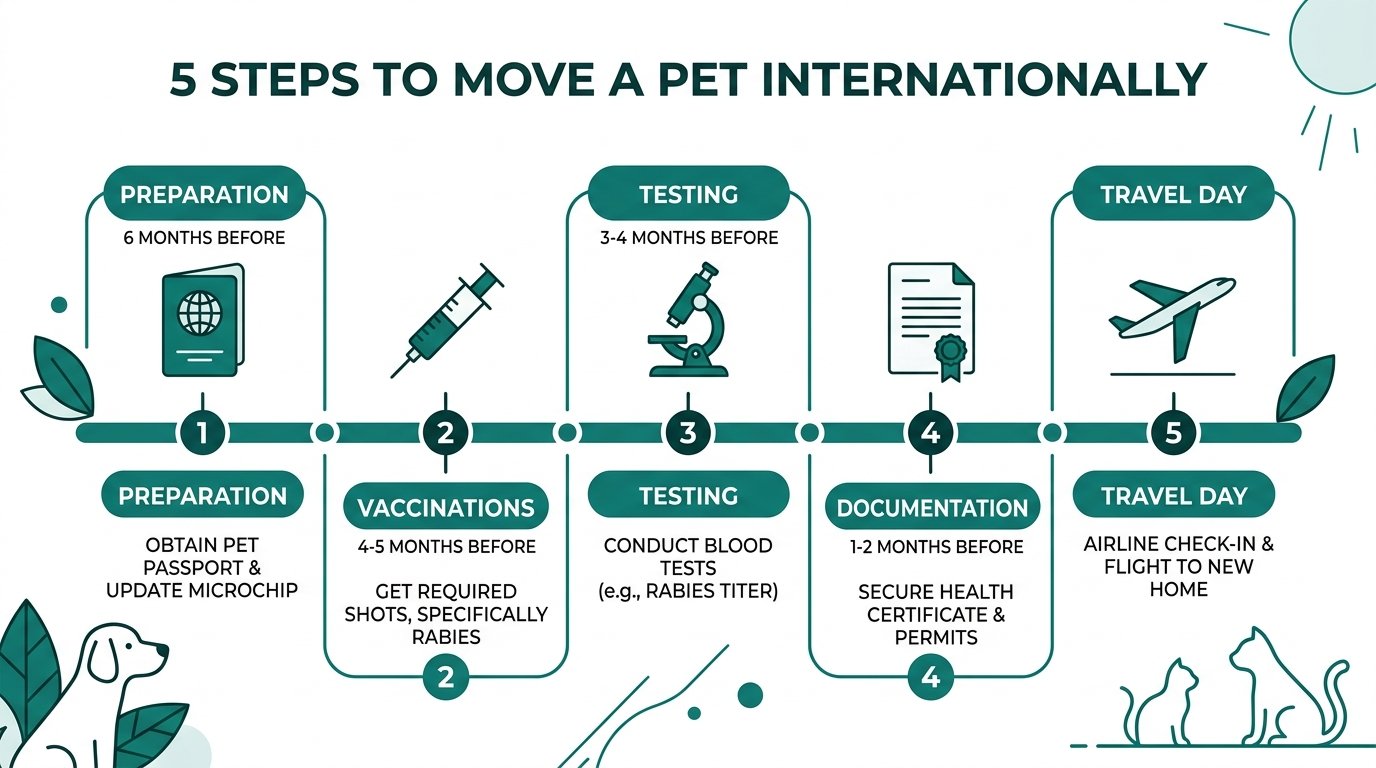
Exporting a Pet From India (Outbound)
To fly your pet out of India, you must comply with the export rules of the Indian government as well as the import rules of your destination country.
1. Destination Country Rules
The destination country dictates the timeline of your move. Countries like the UAE (Dubai), the UK, and Singapore have stringent import protocols. Many countries require a Rabies Titer Test (RNATT) which can introduce a waiting period of up to 3 months before travel. Always check destination rules first.
2. AQCS Export NOC
You must obtain a No Objection Certificate (NOC) from the Animal Quarantine and Certification Service (AQCS) at your port of departure (Delhi, Mumbai, Bengaluru, etc.). This typically requires:
Required Export Documents
- A pre-travel examination booking at the AQCS office (usually 7 days before departure).
- A Veterinary Health Certificate from a registered local vet stating the pet is "fit to fly".
- A 15-digit ISO-compliant microchip certificate.
- Up-to-date vaccination records.
- Copies of the owner’s passport and flight ticket.
Importing a Pet to India (Inbound)
Importing your dog or cat into India is managed by the AQCS. If you meet the documentation requirements, healthy pets are generally cleared at the airport without requiring long-term facility quarantine.
1. Eligible Pathways
Most pet owners use the Transfer of Residence (Baggage Rule), which allows individuals relocating permanently to India (after living abroad continuously for at least two years) to bring up to two pets. Short stays or commercial imports usually require a complex DGFT import license.
2. Advance NOC
You must apply for an Advance NOC from the Indian AQCS at least 7 days prior to your flight. Do not board a flight to India without this document.
3. Health & Vaccination
The pet must be microchipped (ISO 11784/11785) before receiving a valid rabies vaccination (administered at least 30 days prior to travel). An official veterinary health certificate from the origin country is strictly required.
Popular Destination Timelines & Requirements
Planning is critical. Missing a vaccine window can delay your pet's travel by months. The following are general observed guidelines; REQUIREMENT_VARIES_BY_DESTINATION and official government sources must always be consulted before travel:
USA & Canada
General Preparation: 4 to 8+ weeks
Requires an ISO-compliant microchip and valid rabies vaccination. Under the August 1, 2024 update, dogs from high-risk rabies countries must have a CDC Dog Import Form, and either a US-issued Rabies Certificate or a foreign-issued certificate with an RNATT. Entry may be restricted to designated ports.
OFFICIAL_SOURCE: US Centers for Disease Control and Prevention (CDC)
SOURCE_URL_OR_REFERENCE: cdc.gov/importation/dogs
UK & EU
General Preparation: 3 to 4+ months
India is an "unlisted" country. Pets must be microchipped before the rabies vaccination. An RNATT must be taken at least 30 days post-vaccination. After a successful blood draw, a strict 3-month waiting period applies before the pet can enter. Dogs require tapeworm treatment 24-120 hours before arrival.
OFFICIAL_SOURCE: UK Department for Environment, Food & Rural Affairs (DEFRA)
SOURCE_URL_OR_REFERENCE: gov.uk/bring-pet-to-great-britain
European Union (EU)
General Preparation: 4 to 6 months
Similar to the UK, India is an unlisted third country. The mandatory sequence is: Microchip → Rabies Vaccination → Wait 30 days → RNATT blood draw → Wait 3 months. Entry requires an EU Animal Health Certificate and pets must enter through a designated Traveler's Point of Entry (TPE).
OFFICIAL_SOURCE: European Commission - Movement of Pets
SOURCE_URL_OR_REFERENCE: food.ec.europa.eu
UAE (Dubai)
General Preparation: 3 to 4+ months
Requires microchip, standard vaccinations, and an RNATT from an approved lab. An import permit from the Ministry of Climate Change and Environment (MOCCAE) is mandatory and valid for 30 days. Certain breeds are restricted.
OFFICIAL_SOURCE: UAE Ministry of Climate Change and Environment (MOCCAE)
SOURCE_URL_OR_REFERENCE: moccae.gov.ae
Australia & New Zealand
General Preparation: 6 to 12+ months
India is a non-approved country. Direct import is banned. Pets must be relocated to an approved Group 2/3 country, reside there for at least 180 days, pass RNATTs, and undergo mandatory 10-day facility quarantine upon final arrival in Australia (Mickleham facility).
OFFICIAL_SOURCE: Australian Dept of Agriculture, Fisheries and Forestry (DAFF)
SOURCE_URL_OR_REFERENCE: agriculture.gov.au
International Pet Relocation Costs
Because international pet travel relies on airline cargo rates and complex veterinary procedures, costs are highly variable and customized to the specific route and pet. Your total cost will depend on several factors rather than a fixed package price:
- Volumetric Weight: Airlines calculate cargo costs based on the dimensions of the IATA crate, not just the animal's physical weight. A large breed like a Golden Retriever costs significantly more to fly than a Domestic Shorthair cat.
- Destination Regulations: Countries requiring RNATTs, import permits, and mandatory customs clearance agents (like the UK) incur higher documentation and veterinary testing fees.
- Travel Mode: Excess baggage is generally cheaper than manifest cargo, but manifest cargo is often mandatory for specific routes or breeds (such as the UK).
- Quarantine & Agent Fees: Highly restricted destinations (like Australia) involve mandatory facility quarantine fees and specialized broker charges.
IATA Compliant Travel Crates
Airlines follow the IATA Live Animals Regulations (LAR). Your pet cannot travel in a standard wire cage or a soft carrier (unless traveling in-cabin under specific airline rules).
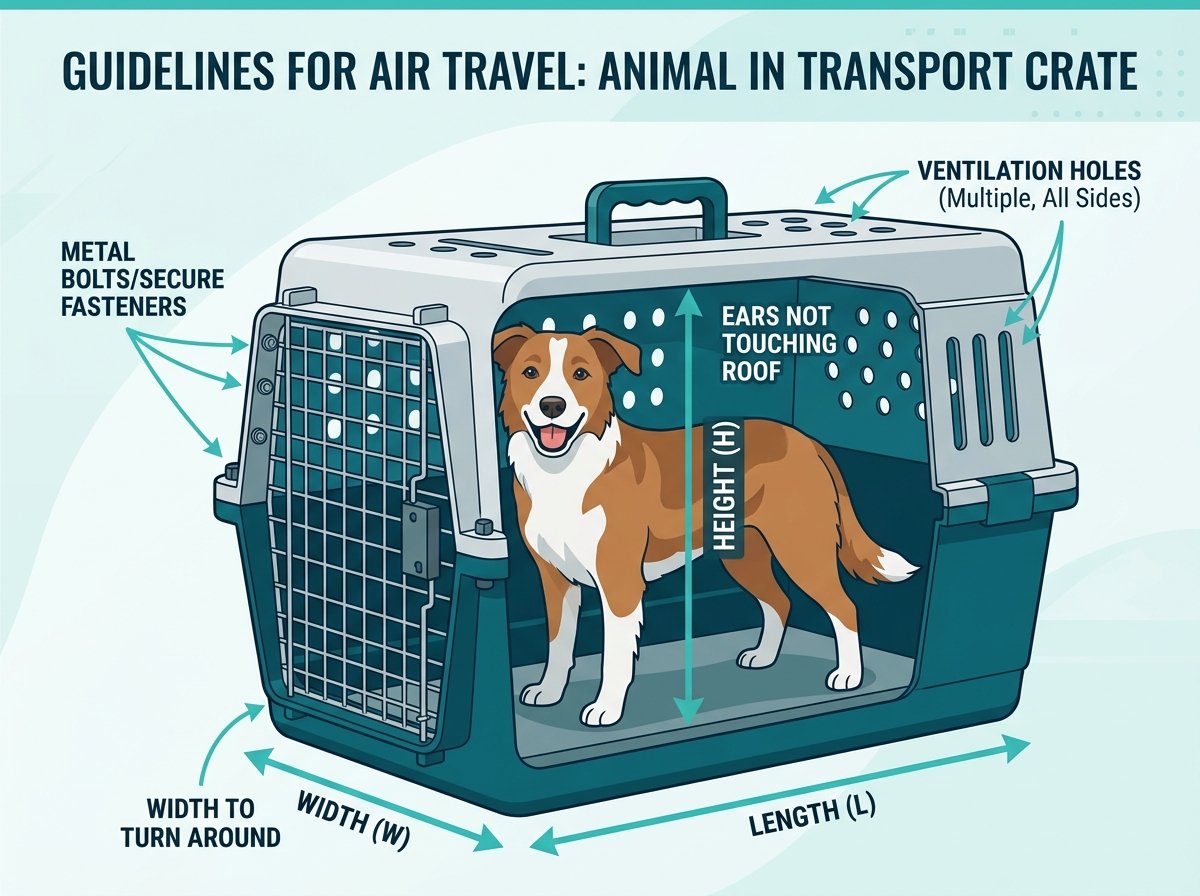
Crate Requirements Checklist
- Size: The crate must be large enough for the pet to stand up completely without their ears touching the top, turn around naturally, and lie down comfortably.
- Material: Must be rigid plastic, wood, or metal, with secure metal nuts and bolts (no plastic clips).
- Ventilation: Must have ventilation on at least three sides (four sides for international flights).
- Accessories: Must include securely attached water and food bowls accessible from the outside.
Frequently asked questions
- Can my pet fly in the cabin with me?
- This depends entirely on the airline's policy and the destination country's laws. Some countries (like the UK or Australia) strictly require all pets to arrive as manifest cargo. If allowed in-cabin, strict weight limits (usually 5kg-8kg including the bag) apply.
- How long does the international pet relocation process take?
- For countries with standard requirements, preparation takes 4 to 6 weeks. For rabies-free countries (e.g., Australia, New Zealand) or those requiring titer tests, the preparation process can take 3 to 6 months.
- Will my pet be quarantined in India?
- Generally, no. Under current rules, if your documentation is perfect and the pet passes the physical examination by the AQCS officer at the Indian port of entry, they will be released to you for home observation.
Request an International Pet Transport Quote
Planning an international move? Contact ShiftGo early in your timeline. Provide your pet's breed, age, weight, and your exact origin and destination countries to receive expert guidance and a customized quote.